
October 7, 2021
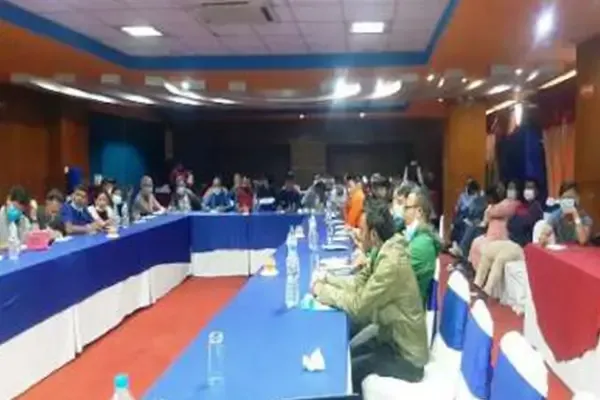
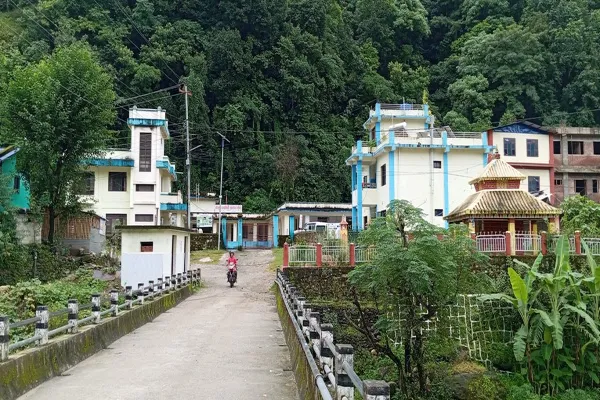
Series of Media interactions were held in 5 locations (Dhamilikuwa, Archalbot, Bajhakhet, Khudi and Ghermu) of Lamjung district from 2-6 October 2021.
A team of journalists interacted with the communities affected by the EIB-funded 220 kV Marsyangdi Corridor, a high voltage transmission lineproject which is being implemented by the Nepal Electricity Authority (NEA).
The interactions were focused on the implementation of the investigation report of the Bank's complaint mechanism that was released on April 2021. The report strongly condemned the failures of the EIB and NEA to comply with the EIB’s rules and international legal commitments. It finds that the EIB overlooked the project’s impact on Indigenous Peoples, and that the NEA did not conduct a mandatory FPIC process
The key recommendations of the report are;
- The EIB must, with the help of experts, develop an approach to fulfill FPIC.
- EIB must ensure no further financing is provided for the Marsyangdi Corridor unless the violations are addressed.
- EIB and NEA must prepare inaction plan as soon as possible (no later than six months) to address the violations found by the Complaints Mechanism. Then, EIB must support NEA to implement the action plan and comply with EIB standards. At the minimum, this requires using experts to meaningfully engage with affected communities including Indigenous Peoples.
- EIB and NEA must improve communication about the Project, its impacts, resettlement and project activities with the affected communities. This involves ensuring the project affected communities participate in environmental and social impact assessments and resettlement plans.
- EIB must ensure adequate representation of project affected communities and full transparency in the calculation of compensation.
- With regard to assessing the adequacy of compensation, EIB and NEA must carry out an audit to assess the adequacy of the compensation proposed / received based on a representative sample of different categories of project affected people in different locations, and formulate corrective actions if necessary.
- Complaints Mechanism recommended a flexible and transparent approach based on best practice whereby the actual impacts of land use restrictions under the right of way are assessed on a case-by-case basis.
Around 300 affected community members ,who participated in the media interactions, have said that none of the recommendations have been implemented as of now. They strongly made demands to implement the recommendations of the investigation report for the sustainability of the project.