August 9, 2021.
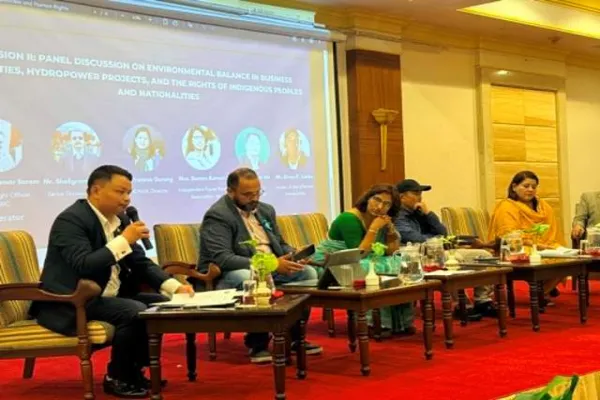
LAHURNIP, Land Governance Working Group (LGWG) and the International Land Coalition (ILC), Asia organized virtual multi-stakeholder dialogue on "Indigenous Peoples' Lands Tenure Security and Territorial Rights in Nepal" on the occasion of International Day of the World's Indigenous Peoples.
The dialogue observed an incredible engagement of the Indigenous Peoples and non-indigenous people that have separately been working on land/s issues in Nepal.
Dharm Raj Joshi, Facilitator of the NES Nepal, moderated the discussion. Dr. Chaitanya Subba, an eminent indigenous expert delivered a comprehensive presentation on the history of how Indigenous Peoples in Nepal gradually become marginalized on their own ancestral lands. Mr. Janak Raj Joshi, Joint Secretary of the Government of Nepal, presented land related laws and policies of the government.
Dr. Subba shed light on the nature and cause of weak land and territorial rights of Indigenous Peoples in Nepal and provided recommendations to the government to resolve the lands conflict from the perspectives of Indigenous Peoples. According to Dr. Subba, land ownership or tenure security is the most sensitive issue for indigenous peoples which is worsened by ruling elite prejudices, by means of inheritance of feudal culture, legal complications and corrupt administrative practices.
He emphasized on the diachronic and synchronic study on the processes and consequences of transition of collective land tenure/ownership into individual forms of land tenure/ownership and fragmentation of land. This could also shed light on the root causes and underlying causes of rampant poverty, deprivation, exclusion and denial of land rights. He further said that land injustice is still continuing because of widespread impunity of perpetrators and increasing influences of land mafias. For him, 'equity concerns and social differentiations' relating to indigenous lands are of paramount importance to maintain social harmony. In addition to that, Dr. Subba further said that the restoration of traditional collective ownership over natural resources has become most challenging, as the day that Indigenous Peoples used to provide certain patches of forest to the government for their use has gone now due to nationalization.He strongly recommended that the right-based approach should be adopted in implementing land reform and management programs, and infrastructure development
Meanwhile, Mr. Joshi provided the details of the policy frameworks with the puzzling facts that the national land policy framework does not recognize the IPs right to land territories and resources however the state has signed prominent international instruments (ILO-169, UNDRIP. CBD etc.) with commitments to safeguard and promote Indigenous Peoples' lands and territorial rights. He said that the State should be able to protect and promote indigenous peoples land rights based on the provisions of international frameworks related to indigenous peoples.
In his closing remarks Jagat Basnet, executive director of CSRC said that Indigenous Peoples have been suffering from the unjust treatment from both the state and the market which further made it harder for Indigenous Peoples to maintain the sustained control over the land and resources. At this point it is imperative that the land mapping and its records need to be conducted and created in participation of community people.
Dinesh Ghale, vice-chairperson, LAHURNIP claimed that the land issues of indigenous people are heavily debated with the state. The main cause of this is the priority of the state to control the important lands in the name of establishment of various National Parks. Indigenous peoples are mercilessly evicted from their land. State lacks the proper coordinated efforts and following the provision of Free Prior Informed and Consent (FPIC) while implementing various development projects. In the questions of protecting or promoting nationalism, the identification and recognition of indigenous lands and their system of natural safeguard has proved to be the key tool. He emphasized on the continuation of this type of multi-stakeholder dialogues which will reduce the conflicting claims of land between the state and Indigenous Peoples in Nepal.