An infographic, “2025 National Survey: Indigenous Peoples of Nepal — Rights, Realities and Future Pathways,” summarizes a comprehensive national survey and exposes the wide gap between policy commitments and the lived realities of Nepal’s Indigenous Peoples.
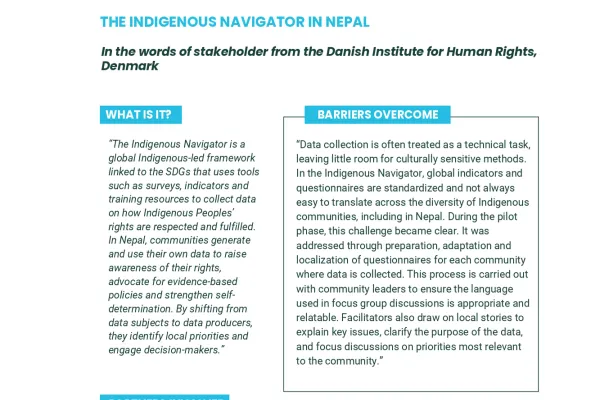
Led by LAHURNIP under the Indigenous Navigator —a set of tools for Indigenous Peoples to monitor the recognition and implementation of their rights—the survey provides the most comprehensive assessment to date. It covers self-determination, land, Free, Prior and Informed Consent (FPIC), education, health, cultural integrity, and more.
Despite Nepal’s commitments under international instruments such as UNDRIP and ILO Convention No. 169, as well as its own national legislations that recognize Indigenous rights to a limited extent, these provisions remain largely unimplemented. As a result, more than half of the country’s Indigenous population continues to experience systemic exclusion, inadequate recognition, and the erosion of their cultural and linguistic heritage.
The report highlights positive initiatives, such as Kirtipur Municipality’s Cultural Protected Area and recognition of Tharu customary governance. However, it emphasizes the urgent need for constitutional reforms to guarantee Indigenous self-determination and the enactment of binding FPIC legislation to protect Indigenous lands and resources.
“This is more than a report—it is a wake-up call for Nepal to honor its international commitments and ensure justice, dignity, and equality for its Indigenous Peoples,” said Advocate Dinesh Kumar Ghale, Chairperson of LAHURNIP.